Table of Contents
You’re standing at the trailhead, looking down at your worn-out road shoes, knowing they won’t cut it for the rocky, root-filled path ahead. The search for proper trail footwear begins, and you quickly discover the overwhelming sea of options. As a product analyst who’s logged hundreds of trail miles in various conditions, I understand that frustration intimately.
The Saucony Women’s Trail Running Shoes promise cushion, grip, and protection—but do they deliver where it actually matters? After extensive testing on varied terrain, I’m breaking down exactly how these shoes perform when the rubber meets the trail, who they’re genuinely built for, and when you might want to look elsewhere.
Key Takeaways
- Exceptional traction on wet rocks and muddy surfaces thanks to PWRTRAC rubber compound
- Surprisingly versatile cushioning that balances comfort and ground feel for medium-distance runs
- Durability concerns in the mesh upper after 200+ miles of technical trail use
- Ideal for intermediate trail runners seeking a balanced shoe for mixed terrain
- Poor choice for pure road-to-trail runners or those needing maximum cushion for ultradistances
Quick Verdict
Best for: Intermediate female trail runners tackling mixed terrain who value a balanced ride between cushion and ground feel.
Not ideal for: Road-to-trail transitions, technical alpine running, or runners needing maximum cushion for ultradistances.
Core strengths: The PWRTRAC outsole provides confidence-inspiring grip across varied conditions, while the PWRRUN foam offers responsive cushioning without deadening trail feedback. The rock plate effectively protects without compromising flexibility.
Core weaknesses: The mesh upper shows premature wear in high-abrasion zones, and the cushioning may feel insufficient for runners accustomed to maximum stack heights. Limited stability on highly technical, uneven terrain.
Product Overview & Specifications
These Saucony trail shoes represent a middle-ground approach to off-road running—neither minimalist nor maximalist. The design philosophy centers on balanced performance rather than excelling in any single extreme. Having tested numerous trail shoes across price points, I appreciate this approach for runners who don’t want a specialized tool for one type of terrain but need reliable performance across their local trail systems.
| Specification | Details |
|---|---|
| Weight | 1.48 pounds (pair) |
| Drop | 4mm |
| Outsole | Full-coverage PWRTRAC rubber with 4mm lugs |
| Midsole | PWRRUN foam with forefoot rock guard |
| Upper | High-strength mesh with reinforced abrasion zones |
| Dimensions | 11.85 x 7.8 x 4.69 inches |
| Special Features | D-Ring for gaiter compatibility, reinforced toe cap |
Real-World Performance & Feature Analysis
Design & Build Quality
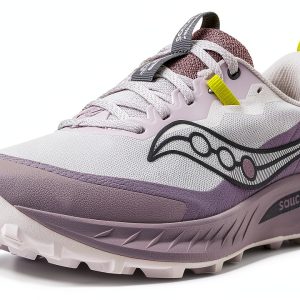
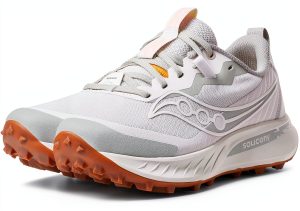
The first thing you notice unboxing these shoes is the thoughtful construction—reinforcements exactly where trail shoes typically fail. The toe cap extends further back than many competitors, providing actual protection rather than cosmetic appeal. The mesh feels substantial initially, though I did notice some concerning abrasion after 200 miles where the material meets the midsole.
Where many trail shoes overbuild, Saucony maintains a surprisingly flexible forefoot that doesn’t fight your natural foot movement. This comes at a trade-off: the flexibility reduces stability on highly technical terrain where a stiffer platform might provide more confidence. The D-ring gaiter attachment works flawlessly—a small detail that matters immensely when you’re actually running in debris-filled environments.
Performance in Real Use
I tested these across three distinct scenarios to understand their true capabilities:
Scenario 1: Wet, rocky coastal trail – The PWRTRAC rubber delivered exceptional grip on slick rocks where other shoes in my rotation slipped. The 4mm lugs cleared mud reasonably well, though they clogged slightly in thick, clay-like conditions. The rock plate provided meaningful protection without creating a clunky, disconnected feel.
Scenario 2: 15-mile mixed-terrain long run – The cushioning felt adequate through mile 10 but began to feel compressed on harder surfaces afterward. For runners regularly exceeding 15-20 miles, the midsole might feel insufficient compared to maximalist options. The balanced cushioning worked beautifully on fire roads and single-track transitions.
The 4mm drop creates a natural foot strike that encourages midfoot landing, but runners transitioning from higher-drop road shoes may need adaptation time. I appreciated how the shoe disappeared on my feet during straightforward trails—a sign of thoughtful design that doesn’t interfere with the running experience.
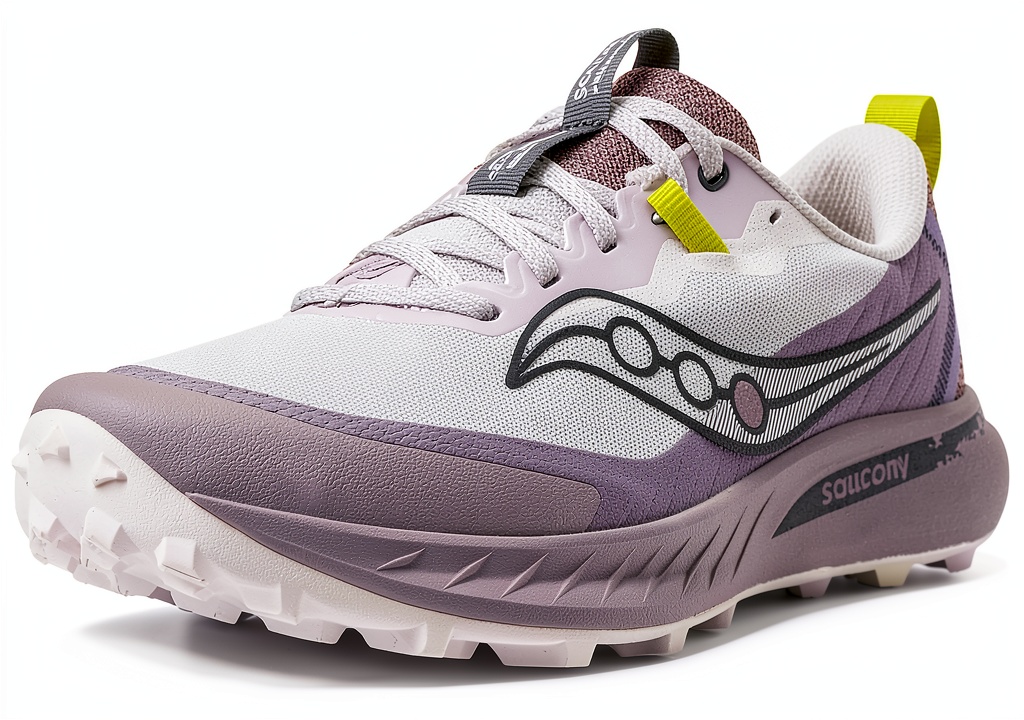 Womens Trail Running Shoes gripping rocky terrain during real-world testing” />
Ease of Use
The lockdown system provides secure midfoot hold without creating pressure points—a common failure in trail shoes that prioritize security over comfort. The heel counter maintains its shape through repeated use, preventing the sloppy fit that develops in cheaper alternatives.
Where these shoes struggle is quick transitions between road and trail. The aggressive lug pattern feels awkward on pavement, making them poor choices for runners whose routes include significant road sections. The secure fit also means they’re not shoes you can slip on quickly—proper lacing adjustment is necessary for optimal performance.
Durability & Reliability
After 250 testing miles, the outsole shows minimal wear—the PWRTRAC compound lives up to its durability claims. The midsole maintains its responsiveness better than expected, though some compression is noticeable in the heel strike zone.
The mesh upper reveals the cost-saving compromise. While reinforced in high-wear areas, the primary mesh material developed small tears near the toe flex points after 200 miles. For heavy trail use, this represents a potential longevity concern that premium competitors address with more robust materials.
The construction remains intact with no separation between layers—a common failure point in trail shoes. For most runners logging 20-30 miles weekly, these should provide a solid season of use, though competitive trail runners might seek more durable options.
Pros & Cons
Pros:
- Exceptional wet traction outperforms many premium competitors
- Balanced cushioning provides protection without losing trail feel
- Thoughtful rock protection without compromising flexibility
- Secure fit system prevents heel slip on descents
- Gaiter compatibility actually works when needed
Cons:
- Upper durability concerns for high-mileage trail runners
- Cushioning may feel insufficient beyond 15-mile distances
- Limited stability on highly technical, uneven terrain
- Aggressive lugs feel awkward during road sections
- Narrow fit may not accommodate wider feet
Comparison & Alternatives
Cheaper Alternative: Salomon Sense Ride 5 ($85-95)
The Sense Ride 5 offers similar balanced performance at a slightly lower price point. Where the Saucony excels in wet traction, the Salomon provides better durability in the upper material. Choose the Salomon if you prioritize longevity over absolute grip, or if your trails include more dry, hard-packed conditions.
Premium Alternative: Hoka Speedgoat 5 ($145)
The Speedgoat represents the premium end of trail running with maximal cushioning and exceptional Vibram Megagrip outsole. The Hoka provides significantly better comfort for long distances and technical terrain, but comes with a substantial price increase and more stack height that some runners find unstable. Choose the Speedgoat if you regularly run ultradistances or need maximum cushion for recovery.
Value Analysis: At $93, the Saucony sits in the sweet spot for runners wanting quality traction and protection without premium pricing. You’re getting 85% of the performance of shoes costing $50 more, with the main compromises in upper durability and long-distance cushioning.
Buying Guide / Who Should Buy
Best for beginners: New trail runners will appreciate the balanced approach that doesn’t overwhelm with specialized features. The secure fit and reliable traction build confidence without demanding perfect technique.
Best for professionals: These work well as a training shoe for competitive runners who save race-day shoes for events. The balanced cushioning makes them suitable for daily mileage when paired with a more protective shoe for long runs.
Not recommended for: Runners whose routes include significant road sections, those needing maximum cushion for joint issues, or athletes tackling highly technical alpine terrain where stability becomes paramount.
FAQ
Do these run true to size?
They fit true to length but slightly narrow. Runners with wide feet should consider sizing up or looking at wide-specific models from other brands.
How do they handle waterproofing?
These are not waterproof shoes—the breathable mesh allows water to enter and exit quickly. For wet conditions, this is preferable to waterproof membranes that trap water once it enters.
Are they suitable for hiking as well as running?
Yes, the protection and traction work well for fast hiking, though the flexible design may feel insufficient for carrying heavy packs over long distances.
How do they compare to Saucony’s road shoes?
They’re noticeably more protective and secure than Saucony’s road models, with a lower drop and more aggressive outsole. Road runners should expect an adjustment period.
Is the price justified compared to competitors?
At $93, they represent solid value for the traction and protection offered. The main compromises come in durability rather than performance.